
Of all the levers you can pull to grow, the creative itself does the most work. Not the targeting, not the channel mix, not the size of the budget. The idea, and how well it is made. This is the most underrated fact in marketing, and acting on it is close to a free lunch, because good creative makes every other dollar you spend go further.
The biggest driver is the one nobody credits
The single largest factor in whether advertising sells anything is the quality of the creative, not the precision of the targeting. When Nielsen analyzed around 500 campaigns, creative accounted for 47% of the sales they generated, more than reach, brand, and targeting combined. Reach came second at 22%. Targeting, the thing marketers obsess over and pour budget into, came in at 9%.
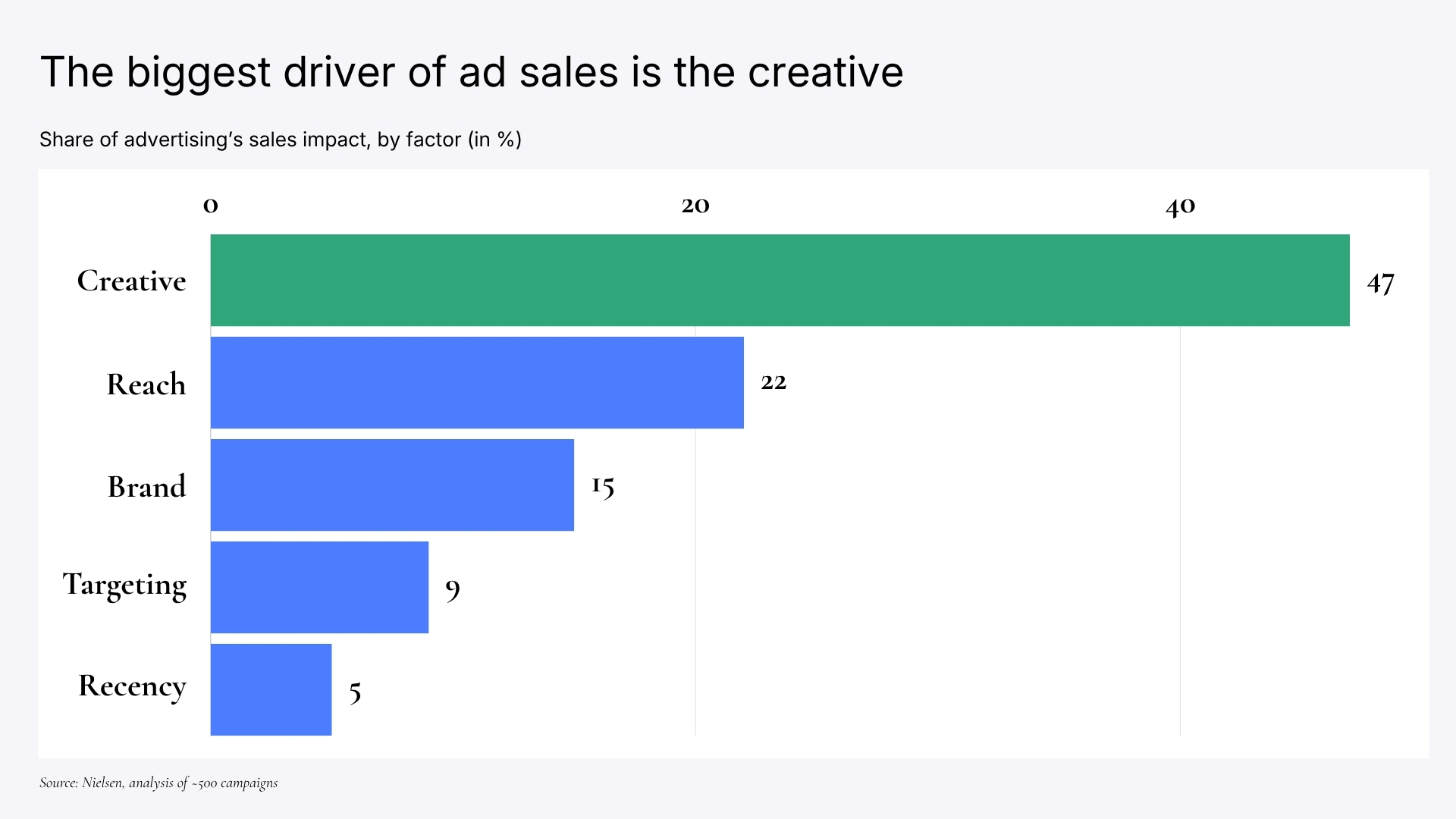 Creative is the largest single driver of advertising's sales impact, ahead of reach, brand, and targeting. Source: Nielsen.
Here is the strange part. Marketers believe close to the opposite. Asked to estimate, they put creative's contribution at around 19%, less than half its real weight, and rank targeting far higher than it deserves. The industry spends its attention on one of the smallest levers and neglects the biggest.
Dull is the most expensive mistake you can make
The flip side of good creative paying off is that boring creative costs you real money, in the form of extra media spend to make up for it. System1 and Peter Field went through the IPA's effectiveness data and found that interesting ads generate 6.1 times more market-share growth than dull, rational ones. To reach the same growth with a dull ad, you have to spend about 2.6 times more on media. That gap is the price of forgettable work, and you pay it out of the media budget, quietly, every time it runs.
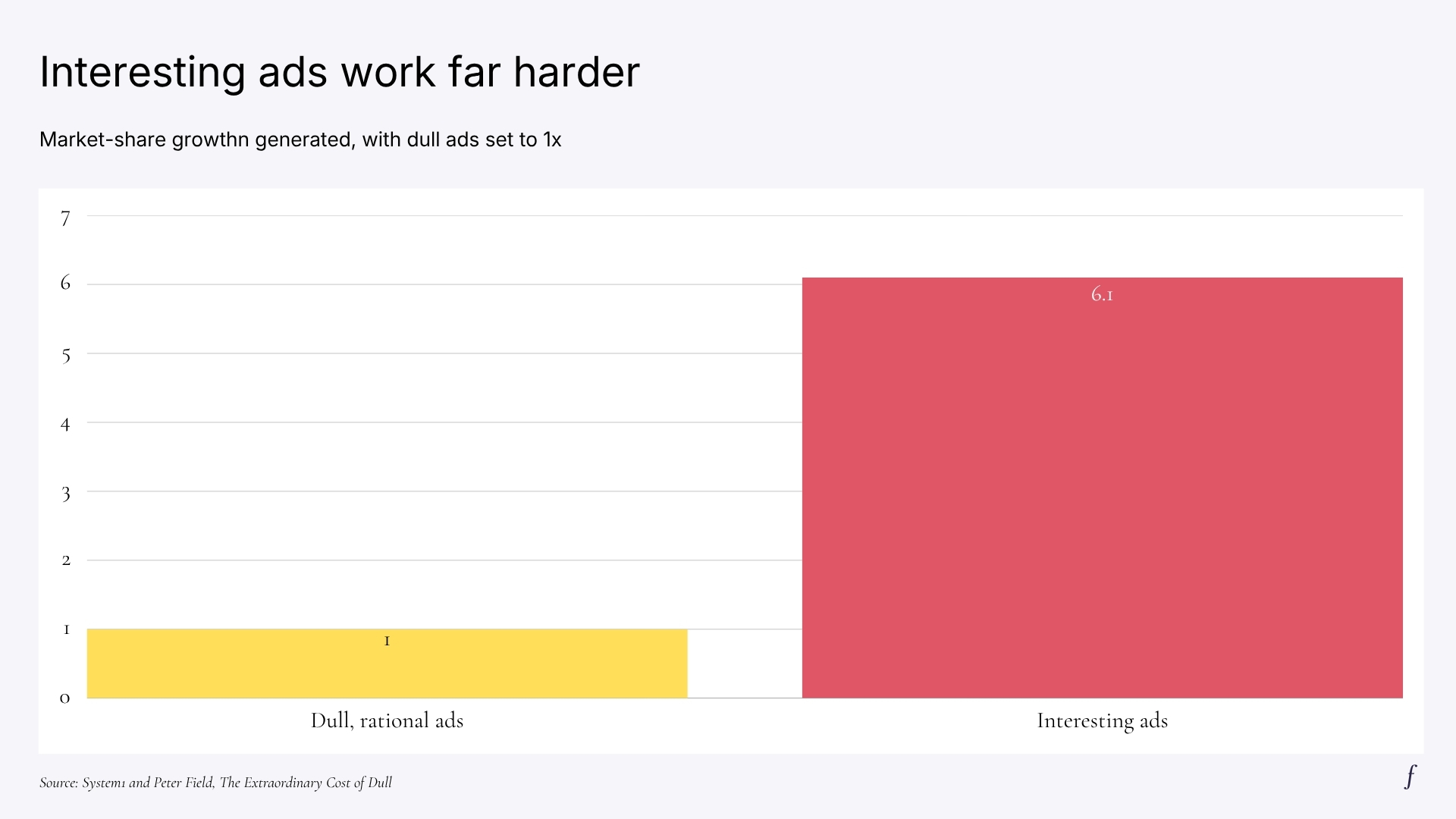 Interesting ads generate about 6.1 times the market-share growth of dull ones. Source: System1 and Peter Field, The Extraordinary Cost of Dull.
Creativity is a multiplier, not a line item
Creative behaves differently from your other costs: it changes the return on all of them. A great idea does not just perform on its own. It lifts the reach you bought and the money you put behind it, because more people notice it and remember it. That is why the numbers can look almost too good. Peter Field's long-run analysis of award-winning work once put it at around 12 times more efficient than average, though he has since shown that advantage shrinking as creativity gets misapplied to chase short-term sales. Which is the lesson twice over. Creativity is the most powerful lever you have, and it works best pointed at building the brand, not at squeezing the current quarter.
What this means if you cannot outspend anyone
If you cannot outspend your competitors, you can out-create them, and that is the more winnable game. A brand with a fraction of the media budget can beat a bigger one by making work people actually want to watch, and it happens constantly. This is the most democratic fact in marketing. Reach and targeting cost money. A better idea costs mostly courage, the willingness to make something interesting instead of something safe. Safe is what almost everyone defaults to, which is exactly why interesting is still available.
Most companies save their biggest budgets for media and their smallest for the idea, then wonder why the work does not land. Reach and targeting can only carry an idea as far as the idea is worth carrying. So start there, with something worth remembering, and let the budget amplify it rather than apologize for it.