
Trying to reach everyone is the surest way to matter to no one. A message built for all people is built for no person in particular, and people can feel the difference. The brands that grow are the ones that pick someone specific and speak only to them.
We treat "everyone" like the goal. The biggest audience, the widest net. But "everyone" is not an audience. It is an average. And nobody has ever felt spoken to by an average.
The everyone-shaped customer does not exist
There is no such person as everyone, so a message written for everyone reaches no one. When you widen the target until it includes all people, you have to sand off every specific. The particular joke. The particular problem you solve better than anyone. What is left is the beige middle, and the beige middle is invisible.
People notice. McKinsey found that 71% of consumers expect the companies they buy from to speak to them personally, 72% expect to be recognized as an individual rather than a segment, and 76% get frustrated when the experience is generic. Generic is not neutral. Generic is a small insult. It tells the person in front of you that you were not really thinking about them at all.
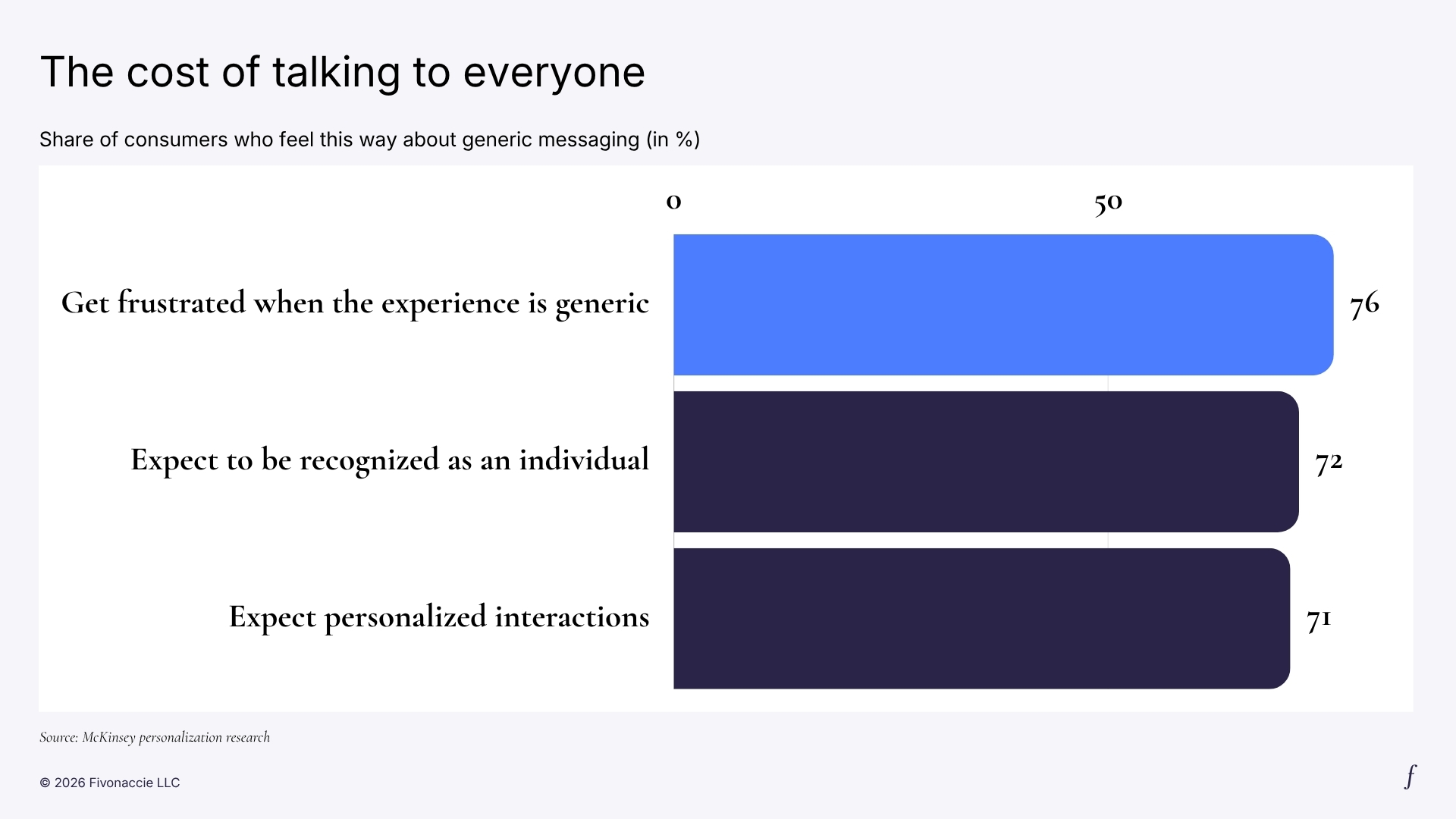
Most people expect to be treated as individuals, and most get frustrated when they are not. Source: McKinsey personalization research.
Specific is what people actually reward
Audiences reward the brands that speak to them directly, with attention and with the kind of loyalty that brings them back. The same research found that 76% of consumers said relevant, personal communication was a reason they considered a brand in the first place, and 78% said it made them more likely to buy again. McKinsey also found that the fastest-growing companies earn about 40% more of their revenue from personalization than slower-growing ones. Relevance is not a nicety. It is the thing that compounds.
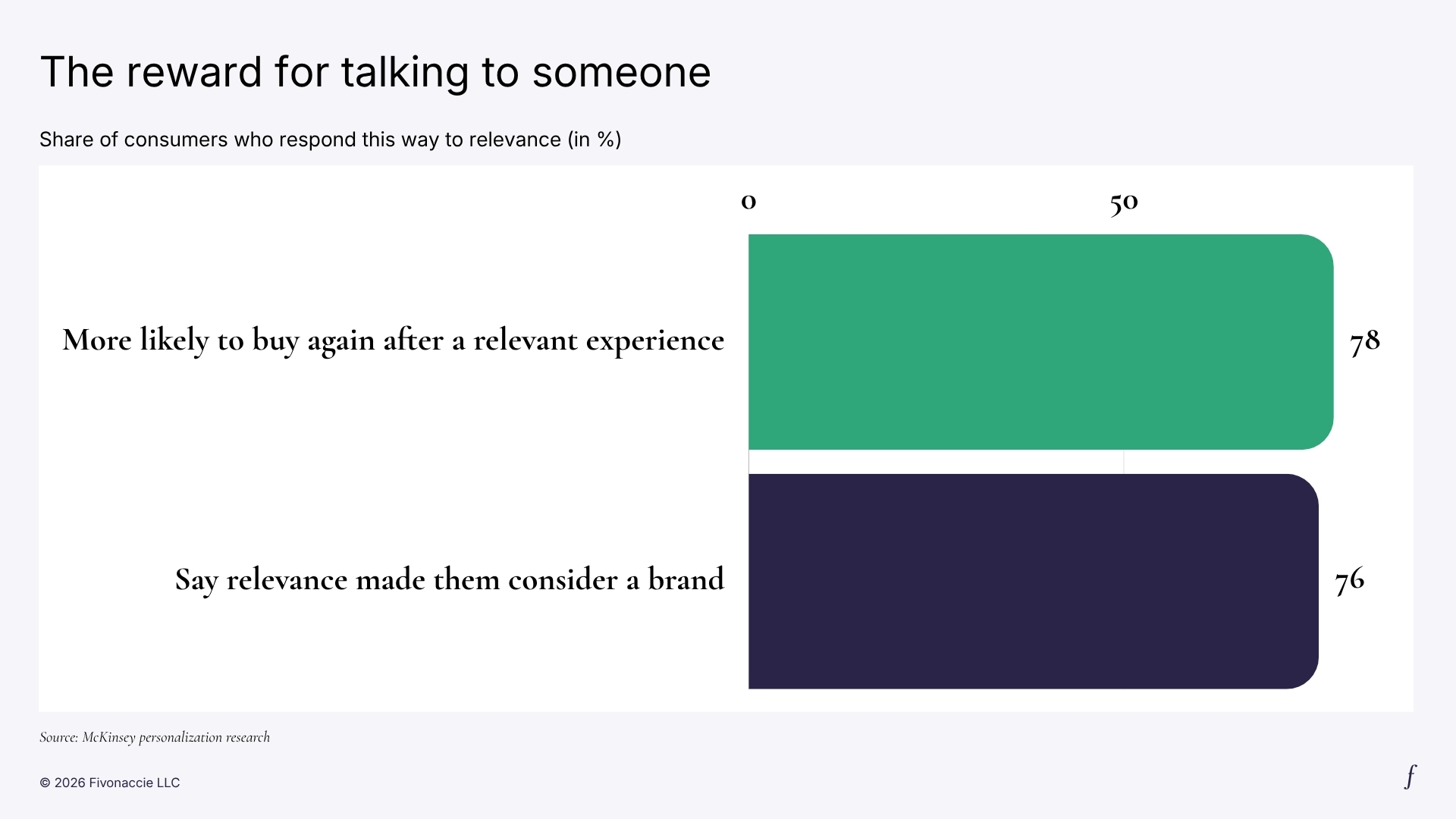
Relevance drives both first consideration and repeat purchase. Source: McKinsey personalization research.
A niche is not a smaller market, it is a clearer one
Narrowing your audience does not shrink your opportunity. It sharpens it. When you serve a specific group, you can charge more and face less competition, because you solve their exact problem instead of a general one while most companies are still shouting at the middle. And you build loyalty, because being understood is rare enough that people stay where they find it.
This is old knowledge. Al Ries and Jack Trout called it positioning: you do not win by being a little of everything to everyone, you win by owning one clear idea in one group's mind. The narrower the idea, the deeper it goes. "For everyone" is not a position. It is the absence of one.
How to find the one person
Pick one real person you already serve well and build everything around them. Not a demographic. Not "women 25 to 45." A person, with a name and a problem and a reason they chose you over the alternative. Write to them. Price for them. Make the thing they would text a friend about.
You probably already know who it is. It is the client who lit up when you described what you do. The customer who said "that is exactly it." The one whose problem you solve in your sleep. Start there, and let the audience you were built for come find you.
None of this is about playing small. It is about being the obvious answer for one kind of person instead of a forgettable option for all of them. Pick that person. Build for them. The others were never really the point.